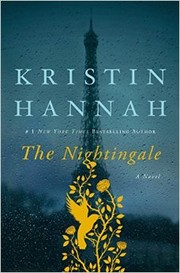
The Nightingale
Kristin Hannah
Two French sisters take different paths of survival and resistance under Nazi occupation.
World War II era · Military & war · Family saga
World War II era · Military & war · ~1939–1945
Looking for historical fiction in the military & war lane set during the World War II era (~1939–1945)? World War II era military & war historical fiction books collects historical novels that match both filters—Global war, resistance, Holocaust, home fronts. Battles, home fronts, and wartime lives HisFic is a free historical fiction discovery app: open a full reading journey with the same era and story-type filters, then add region, themes, or audience. Shelves mix curated historical fiction picks with Open Library titles so even thin combinations still have books to explore.
Curated HisFic picks first.
Kristin Hannah
Two French sisters take different paths of survival and resistance under Nazi occupation.
World War II era · Military & war · Family saga

Markus Zusak
A girl steals books in Nazi Germany; Death narrates a story of words and survival.
World War II era · Military & war · Literary

Kate Quinn
In 1940 three women—society girl Osla, East End clerk Mab, and shy Beth—are recruited to Bletchley Park to break German codes, then torn apart by secrecy and betrayal. In 1947 an encrypted letter pulls them back together to hunt a traitor still hiding in the rose code—World War II historical fiction of friendship, cryptanalysis, and a postwar reckoning.
World War II era · Cold War · Time-slip · Mystery

David Benioff
In the starving winter of the Leningrad siege, seventeen-year-old Lev Beniov is caught looting a dead German and spared only if he and Kolya, a deserting private with a story for every checkpoint, can bring a colonel a dozen eggs for his daughter’s wedding cake. David Benioff’s 2008 novel is World War II military historical fiction of a frozen city, cannibals on the road, and two young men sent behind the lines for a feast nobody can afford.
World War II era · Military & war · Adventure & epic

Paullina Simons
In June 1941, Leningrad still has white nights when Tatiana Metanova meets Red Army officer Alexander Belov—then Hitler’s armies close the siege and hunger, secrets, and an impossible love take the city. Paullina Simons’s opening Bronze Horseman novel is World War II historical romance of the siege of Leningrad: war, family, and a passion that has to survive the winter.
World War II era · Romance · Military & war

Mary Ann Shaffer & Annie Barrows
A writer corresponds with islanders who survived German occupation—and finds a home among them.
World War II era · Military & war · Romance

Heather Morris
Based on a true story: a Slovakian Jew forced to tattoo prisoners at Auschwitz falls in love against impossible odds.
World War II era · Biographical · Romance

Herman Wouk
In 1939 Navy commander Victor “Pug” Henry is posted to Berlin as the American naval attaché, and the war pulls his wife Rhoda, their children, and a Jewish daughter-in-law through Germany, Britain, and Russia until Pearl Harbor, where the battleship he was about to command is hit before he can go aboard. Herman Wouk’s 1971 novel is World War II saga historical fiction of one navy family from the invasion of Poland to the day the United States enters the war.
World War II era · Family saga · Military & war

Lothar-Günther Buchheim
In the autumn of 1941 a German U-boat commander—the Old Man—and his crew leave the French coast for another Battle of the Atlantic patrol, hunting supply ships through storms while destroyers and depth charges hunt them. Lothar-Günther Buchheim’s 1973 novel (English translation) is World War II military historical fiction of that boat: a war correspondent aboard, weeks underwater, and a crew the Atlantic is more likely to keep than to send home.
World War II era · Military & war · Literary
Lucy Caldwell
Two sisters endure the Belfast Blitz over four devastating days (Walter Scott Prize 2023).
World War II era · Literary · Military & war
Simon Mawer
A female SOE agent’s wartime courage and Cold War aftershocks (Walter Scott Prize 2016).
World War II era · Cold War · Literary · Military & war

James Jones
In February 1941 Private Robert E. Lee Prewitt reports to G Company at Schofield Barracks and refuses to box for the company, while First Sergeant Milt Warden risks his career with the commanding officer’s wife, and both are still in Hawaii when the attack hits Pearl Harbor. James Jones’s 1951 novel is World War II military historical fiction of the Regular Army in the last months before the United States enters the war.
World War II era · Military & war · Literary

John Boyne
Nine-year-old Bruno is moved from Berlin to a lonely house beside a fence his sister calls Out-With; from his window he sees people in striped pajamas, and he makes a secret friend named Shmuel on the other side. John Boyne’s 2006 novel is WWII Holocaust historical fiction told as a child’s fable: a friendship through the wire at Auschwitz, and a title readers still search by name.
World War II era · Literary · Military & war

Pierre Boulle
In 1942, Lieutenant Colonel Nicholson marches his British prisoners into Camp 16 beside the River Kwai and refuses Colonel Saito’s order that the officers labor, so Saito shuts Nicholson and his officers in iron boxes. Pierre Boulle’s 1952 novel, in Xan Fielding’s English translation, is World War II military historical fiction of the bridge Nicholson then builds, as a point of honor, on the line between Bangkok and Rangoon—and of the Force 316 team sent from Calcutta to destroy it.
World War II era · Military & war
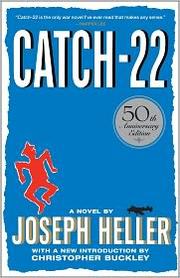
Joseph Heller
On the Mediterranean island of Pianosa in 1944, bombardier John Yossarian is told he can be grounded if he is crazy, and that asking to be grounded proves he is sane, while Colonel Cathcart raises the number of missions again. Joseph Heller’s 1961 novel is World War II military historical fiction of an American bomber squadron, the rule they call Catch-22, and a man the paperwork will not let leave the war.
World War II era · Military & war · Literary

J. G. Ballard
In December 1941, eleven-year-old Jim Graham is separated from his parents when the Japanese army takes the International Settlement in Shanghai, and he survives the streets until he is interned at the Lunghua camp. J. G. Ballard’s 1984 novel is World War II military historical fiction of the years he spends there—hunger, American air raids on the field beside the camp, and the march out of Lunghua as the war collapses.
World War II era · Military & war · Literary

Richard Flanagan
In 1943, Tasmanian surgeon Dorrigo Evans tries to keep Australian POWs alive on the Thai-Burma Death Railway—cholera, beatings, and a Japanese command that measures men in sleepers laid—while the memory of an affair with his uncle’s wife follows him from the jungle into a decorated postwar life he cannot inhabit. Richard Flanagan’s 2013 novel is WWII military historical fiction of the Pacific war, and the Booker Prize winner readers still search by its long title.
World War II era · Military & war · Literary

Ian McEwan
In the summer of 1935, thirteen-year-old Briony Tallis misreads a moment between her sister Cecilia and Robbie Turner, the housekeeper’s son, and a false accusation follows them into World War II—Dunkirk, a London hospital, and a guilt Briony will spend a lifetime trying to rewrite. Ian McEwan’s novel is literary historical fiction of class, war, and the stories we tell to atone.
World War II era · Interwar · Literary · Military & war
Looking for a broader list? See World War II era historical fiction or military & war historical fiction.