Mystery historical fiction: Detection, intrigue, and crime in period settings. Historical mysteries put detection and crime in period settings: abbeys, foggy capitals, colonial ports. Start here, then add place or century on HisFic.
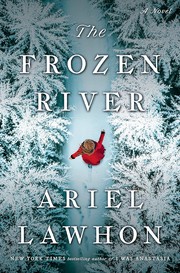
In the winter of 1789, Maine midwife Martha Ballard is called to a body trapped in the frozen Kennebec River, then drawn into a rape accusation the town’s powerful men want buried. Drawn from Ballard’s real diary, it is historical mystery with a working woman’s eye for birth, ice, and justice.
In 1940 three women—society girl Osla, East End clerk Mab, and shy Beth—are recruited to Bletchley Park to break German codes, then torn apart by secrecy and betrayal. In 1947 an encrypted letter pulls them back together to hunt a traitor still hiding in the rose code—World War II historical fiction of friendship, cryptanalysis, and a postwar reckoning.
In 1537 the lawyer Matthew Shardlake is sent by Thomas Cromwell to the Sussex monastery of Scarnsea, where Commissioner Robin Singleton has been found with his head severed, and the sacrilege around the killing will not stay a single death. C. J. Sansom’s 2003 novel is early-modern mystery historical fiction of the dissolution of the monasteries, a reformer who still has to walk the cloisters, and a detective Cromwell expects to close the file.
In 1862 London, pickpocket Sue Trinder is planted as a maid in a lonely Thames-side mansion to help a gentleman swindle an heiress—then the con turns inside out. Sarah Waters’s Booker-shortlisted Victorian novel is literary historical fiction of thieves, asylums, and desire, with crime-plot machinery that still startles.
In 1889 Sir Charles Baskerville is found dead by the yew alley at Baskerville Hall, and the prints nearby are said to be a gigantic hound’s, from a curse on his house. Arthur Conan Doyle’s 1902 novel is Victorian mystery historical fiction of the case Sherlock Holmes and Dr. Watson take for the new heir, Sir Henry—Dartmoor, the Grimpen Mire, and a legend that does not account for every light on the moor.
Victorian / Gilded Age · Mystery · Adventure & epic
In May 1137, Prior Robert of Shrewsbury Abbey sends a party into Wales for the bones of Saint Winifred, and Brother Cadfael goes along as their Welsh translator. Ellis Peters’s 1977 novel is medieval mystery historical fiction of that expedition to Gwytherin—the villager who stands against moving the grave is killed with an arrow, and Cadfael, a former Crusader turned herbalist, looks for a human hand on the bow.
In 1663 Oxford, just after Charles II’s return, fellow Robert Grove is found dead at New College and the servant Sarah Blundy is accused of poisoning him. Iain Pears’s 1997 novel is early-modern mystery historical fiction of four witnesses who will not agree—a Venetian visitor, a dispossessed student, the mathematician John Wallis, and the antiquary Anthony Wood—each telling a Restoration in which the murder is also a political plot.
On a November night Mary Yellan crosses Bodmin Moor to keep a promise to her dying mother, and finds Jamaica Inn shuttered to honest travelers: her Aunt Patience cowers, Uncle Joss Merlyn runs wreckers, and Mary is drawn to Joss’s brother Jem—a horse thief she dares not trust. Daphne du Maurier’s 1936 novel is Regency mystery historical fiction of Cornish smugglers, a haunted inn, and a young woman who will not look away.
In nine snowy days of 1591, Black comes home to Istanbul and finds the Sultan’s miniaturists split over a secret book that would paint faces the Frankish way; Elegant has already been killed, and the corpse, a dog, a gold coin, and the color red take turns naming the murderer. Orhan Pamuk’s 1998 novel (English translation 2001) is early-modern mystery historical fiction of Ottoman book art, heresy, and a workshop that may go blind before it tells the truth.
In the London Library, researcher Roland Michell finds unsigned drafts of a letter from the Victorian poet Randolph Henry Ash, traces them to the poet Christabel LaMotte, and with Maud Bailey follows a correspondence from their secret affair that the academy has never seen. A. S. Byatt’s 1990 novel is Victorian time-slip historical fiction of that affair’s 1859 crisis, and of the late-1980s academics who cross London, Yorkshire, and Brittany to possess the proof.
Victorian / Gilded Age · Late 20th century · Time-slip · Literary
A yellow diamond looted from a temple at Seringapatam is given to Rachel Verinder on her eighteenth birthday in 1848 Yorkshire, and vanishes from her sitting room that night, with no one in the house above suspicion. Wilkie Collins’s 1868 novel is Victorian mystery historical fiction of Sergeant Cuff’s investigation, an opium-blurred memory, and the guardians who want the Moonstone returned to its shrine.
On a moonlit London road, drawing-master Walter Hartright meets a woman dressed all in white—then, engaged at Limmeridge, he is pulled into the plot that binds Laura Fairlie to Sir Percival Glyde and the charming, dangerous Count Fosco. Wilkie Collins’s sensation novel is Victorian historical mystery of swapped identities, a private asylum, and the question of who the woman in white really is.
In 1970 advertising artist Si Morley joins a secret project that reaches the past by self-hypnosis, and from a room in the Dakota he steps into the New York winter of 1882 to trace the half-burned letter Kate cannot explain. Jack Finney’s 1970 novel is Victorian time-slip historical fiction of gaslight Manhattan, the mystery attached to that letter, and a man who falls in love with Julia on the wrong side of a century.
Victorian / Gilded Age · Late 20th century · Time-slip · Mystery
In July 1209, as the Albigensian Crusade closes on Carcassonne, seventeen-year-old Alaïs Pelletier is given a book by her father and told it holds the secret of the true Grail. Kate Mosse’s 2005 novel is medieval time-slip historical fiction of that charge—and of archaeologist Alice Tanner, who in July 2005 finds two skeletons in a Pyrenees cave marked with a labyrinth and cannot leave the Cathars’ war buried.
In June 1857, Sir Michael Audley marries Lucy Graham, a young governess whose past no one near his Essex house can trace. Mary Elizabeth Braddon’s 1862 novel is Victorian mystery historical fiction of Audley Court—and of Robert Audley, who will not accept that his friend George Talboys simply left after a visit to that new wife.
On Valentine’s Day 1900, Appleyard College for Young Ladies picnics at Hanging Rock in the Victorian bush, and after lunch Miranda, Marion, Irma, and mathematics mistress Greta McCraw walk up into the rock and do not all come back. Joan Lindsay’s 1967 novel is Victorian mystery historical fiction of that unfinished afternoon in Australia—a disappearance with no body, no explanation, and a college that comes apart around the gap.
In 1893, newly widowed Cora Seaborne leaves London for the Essex marshes, where rumor of a winged serpent collides with a country vicar, a dying wife, and the new sciences of fossils and medicine. Sarah Perry’s novel is Victorian historical fiction of faith, desire, and a coastal town arguing with the modern world.
On a February night in 1791, in a hidden London shop, the apothecary Nella waits for a customer who wants a poison the register will record, and twelve-year-old Eliza Fanning arrives with an errand that breaks Nella’s rules. Sarah Penner’s 2021 novel is Regency time-slip historical fiction of that book of names—and of Caroline Parcewell, who centuries later finds a small vial mudlarking on the Thames and follows it back to the shop.
In 1866, Walter Moody lands in Hokitika on New Zealand’s West Coast goldfields and walks into a secret meeting of twelve men: a magnate has vanished, a fortune has turned up in a dead drunkard’s cabin, and a prostitute has tried to take her own life. Eleanor Catton’s Booker-winning novel is Victorian historical mystery—gold, astrology, and a frontier town whose fates are mapped to the night sky.
In 1584, Emily St. Aubert loses her father on a journey from Gascony through the Pyrenees, falls in love with Valancourt, and is taken by her aunt’s new husband, Signor Montoni, from Venice to the Castle of Udolpho in the Apennines. Ann Radcliffe’s 1794 novel is early-modern romance historical fiction of Emily’s imprisonment there, the black veil she is afraid to lift, and the engagement Montoni will not let her keep.